
Occasionally I’ll compile lists of the world’s most epic roads, from the scenically spectacular – Australia’s Great Ocean Road, say, or California’s Pacific Coast Highway; and the exciting – Italy’s Stelvio Pass and Mount Fuji’s Touge roads; through to the dangerous – Bolivia’s Yungas Road or, for that matter, Germany’s killer Nürburgring. However, you don’t have to go that far, because some of the planet’s greatest stretches of blacktop, surrounded by unsurpassed vistas, can be found in the north of Scotland. And what better tool is there to tackle these winding roads than a Ferrari? I’ll tell you what: two Ferraris.
Ferrari invited Noted to Scotland’s highlands and west coast, perhaps the most wildly beautiful area of the British Isles, and invited us to pick any two cars from its unlimited production range. So obviously we chose the fastest: the 12Cilindri grand tourer and the convertible version of its hybrid super sports car, the 296 GTS.
The 12Cilindri is perhaps the last hoorah for Ferrari’s normally aspirated V12, which has been the heart and soul of this iconic Italian brand since it was launched in 1947. Founder Enzo said it himself: ‘The 12 cylinder will always be the original Ferrari. So everything else is a derivation.’ Turbocharging is corruption. Losing a couple of blocks of cylinders is surrender. The sleek, cartoonishly bonneted, Space Age-inspired 12Cilindri is a true thoroughbred. There is romance and drama where art meets explosive performance. This is a characterful car that expresses muscle and refinement and almost 80 years of storytelling.
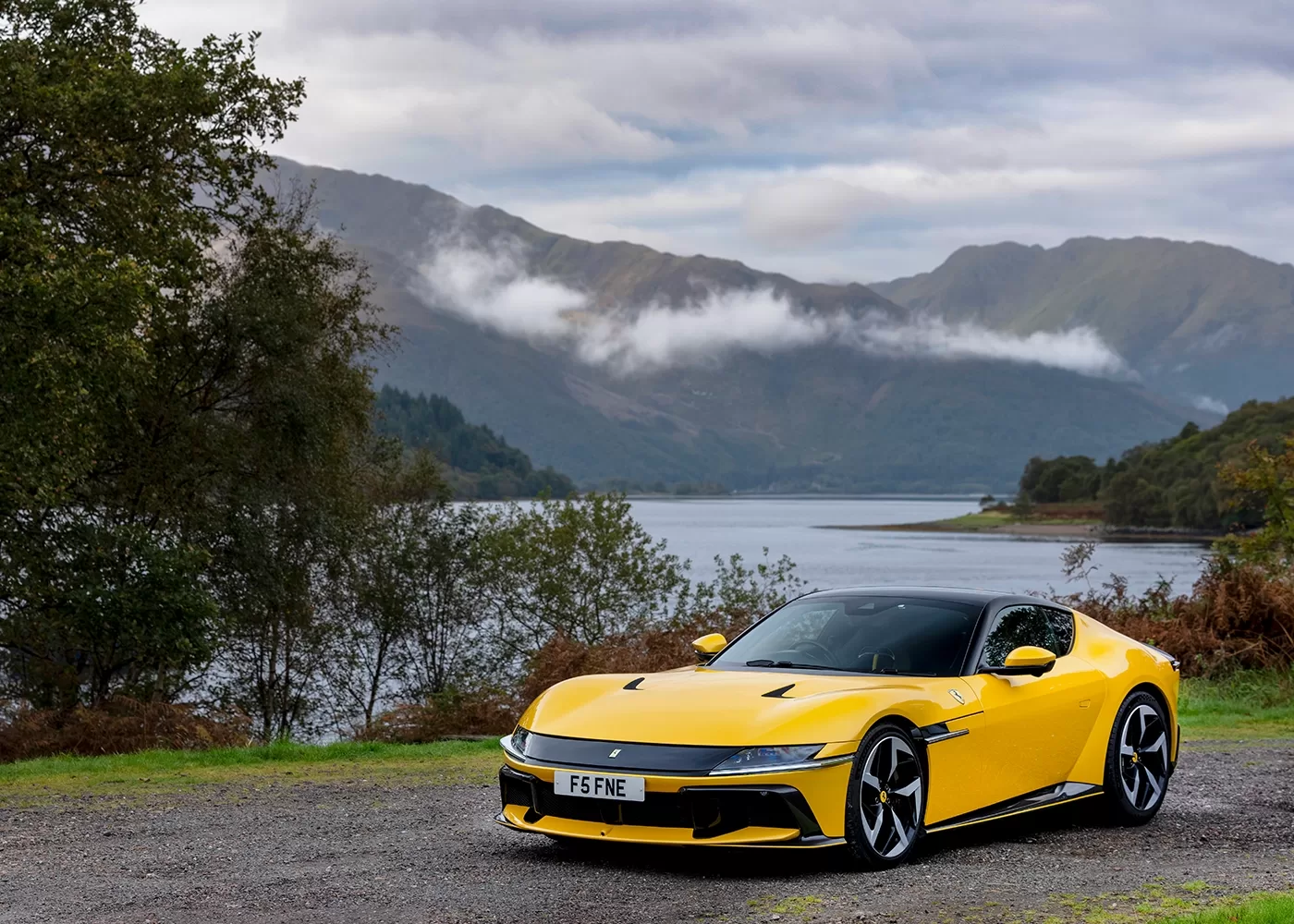

12Cilindri | Photo credit: Max Earey
Phonetically, it’s pronounced Do-DEE-Chee Chill-LIN-Dree. Give it enough gusto and everyone will assume you really are the Tuscan count you pretend to be. It’s a car with old-fashioned values that feels just analogue enough to bring back memories of other front-engined two-seat V12 Ferraris, like the 1960’s 275 GTB and the 1970’s 365 GTB/4 Daytona. It’s designed to crush a continent without creasing your shirt. An elegant brute in a suit, you can imagine a fictional agent from Italy’s AISE secret intelligence service driving it: Jacomo Bond.
The horizontal blade nose and front headlamps of the 12Cilindri owe much to the Daytona, imbuing the car with Miami Vice verve and a manly scent of aftershave, like a sleazy Montreux nightclub. Yet, despite being the colour of fondue (Monte Carlo yellow), this isn’t a throwback. Every inch of this car is routed about 15 minutes into the future.
It also has the first clamshell bonnet since 1992’s 456, exposing the tops of the tyres like a racing car. This one is front-hinged and creates a remarkable silhouette. It is the only car in the world that’ll look even better when it’s broken down. The nose and side views are bold but suave. The rear employs active aerodynamics, whereby black panels pop up to balance the car at aggressive speeds. The light bar and oblong tail-pipes look unfamiliar to what you’d expect from a Ferrari derriere.
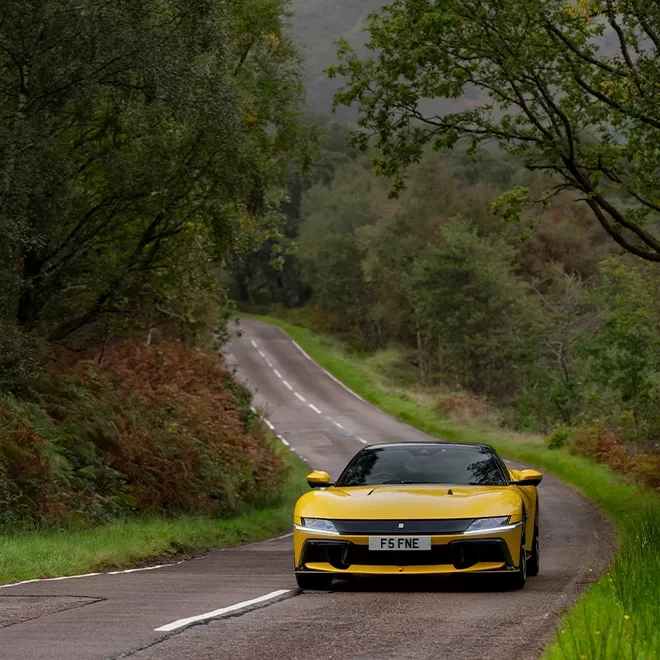
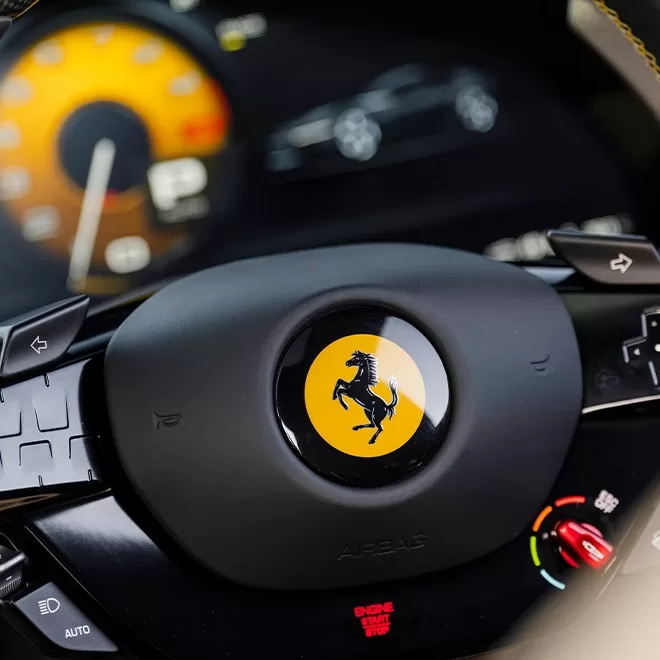
12Cilindri | Photo credit: Max Earey
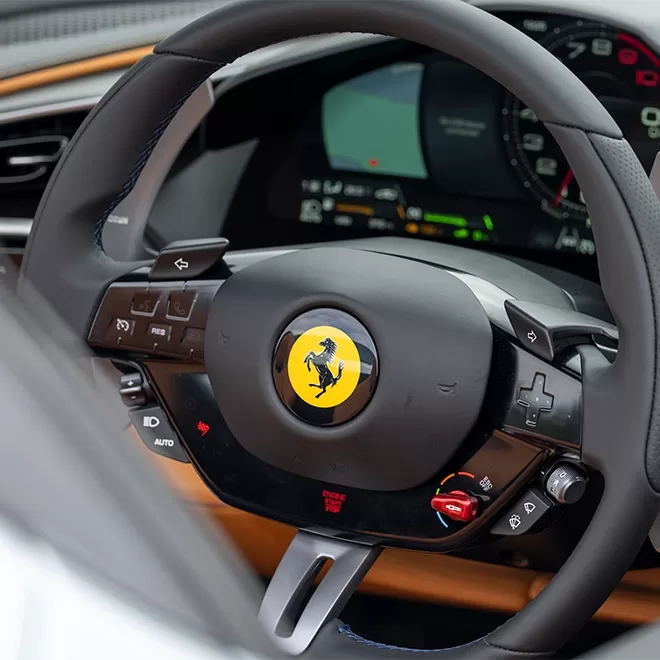
Inside, we have a very streamlined twin-cockpit design that’s a continuation of what designer Flavio Manzoni made for the Roma and Purosangue, and gives just about enough of a sense of occasion to warrant the £336,500 price (the Spider version is another £30k on top, by the way). It’s paid in full, though, as soon as you press the engine start button and click the Manettino dial to Race mode.
This is a long, wide supercar but it shrinks around you when entering a corner. Its huge bespoke tyres do a remarkable job of applying all that bellicose power to the tarmac. What it devours with leonine appetite is long sweeping bends. If you have an empty and winding dual carriageway ahead, and a get-out-of-jail-free card in your wallet, you’ll be in nirvana, intoxicated by the reverberations of its rollicking and operatic powerplant.
Let’s just concentrate on that engine: 819bhp and a 9,500rpm redline, born from a 6.5-litre V12 with titanium con rods and valves that are opened and closed using craftsmanship that’s come direct from Ferrari’s F1 car. Eighty percent of its gargantuan torque is ready and waiting at just 2,500rpm. Each of the eight dual-clutch gears efflux deliciously through the rev range, changing keys like the bridge on Bohemian Rhapsody.
Zero to 62mph takes 2.9 seconds. Top speed is 211. Yet while it’s mind-warpingly quick, it’s also unintimidating. It’s not frenetic, it’s under control. It’s mature. It’s smooth. It’s Al Pacino in his later roles, but boy can both still howl, Scent of a Woman-style. It is a striking and uncompromised gentleman’s express.
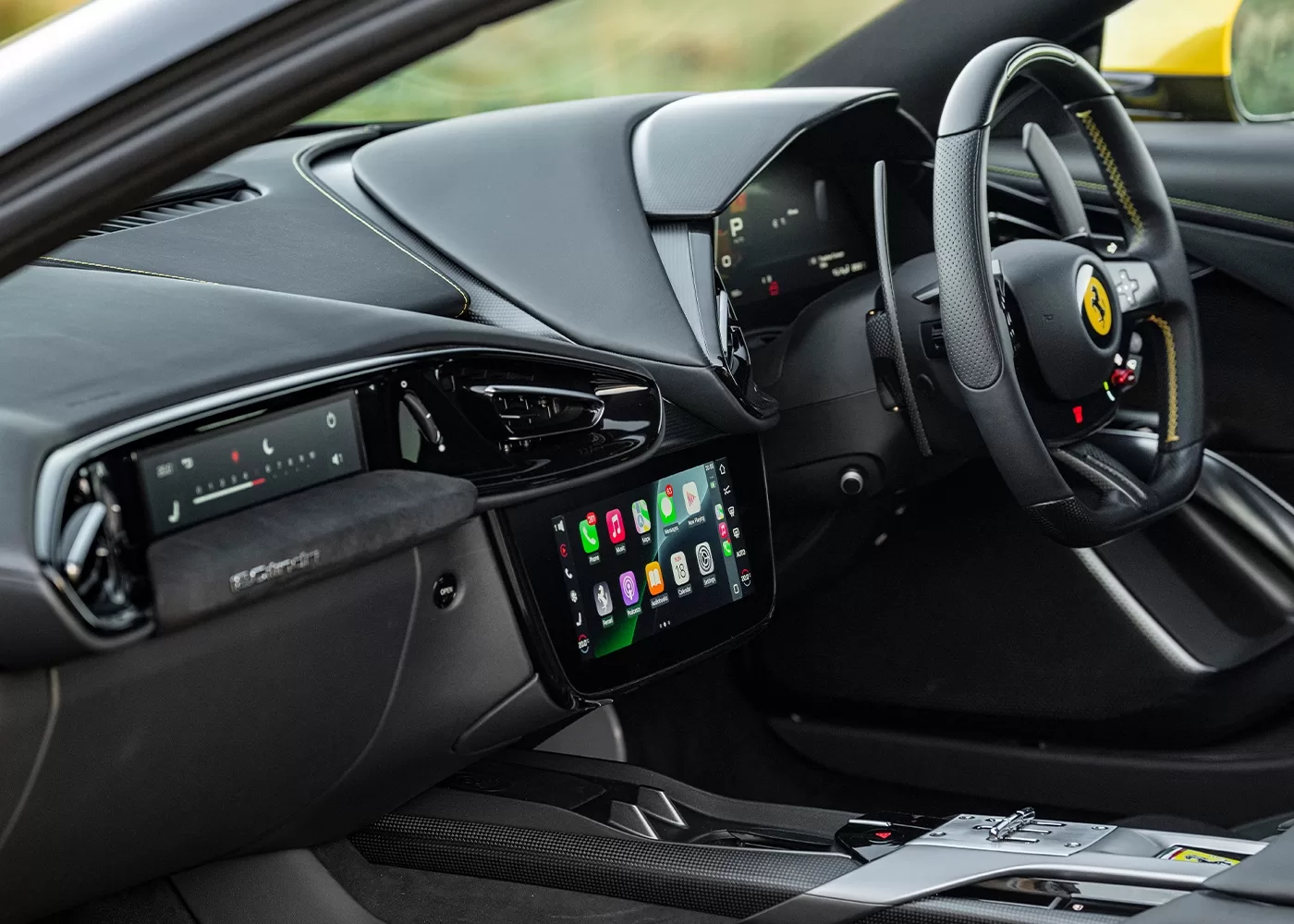
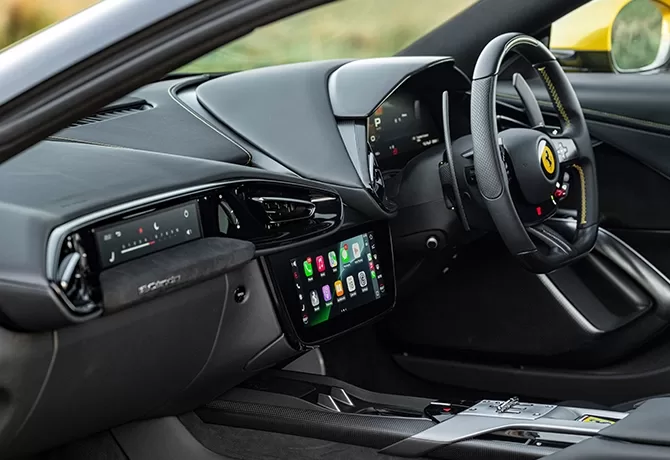
12Cilindri | Photo credit: Max Earey
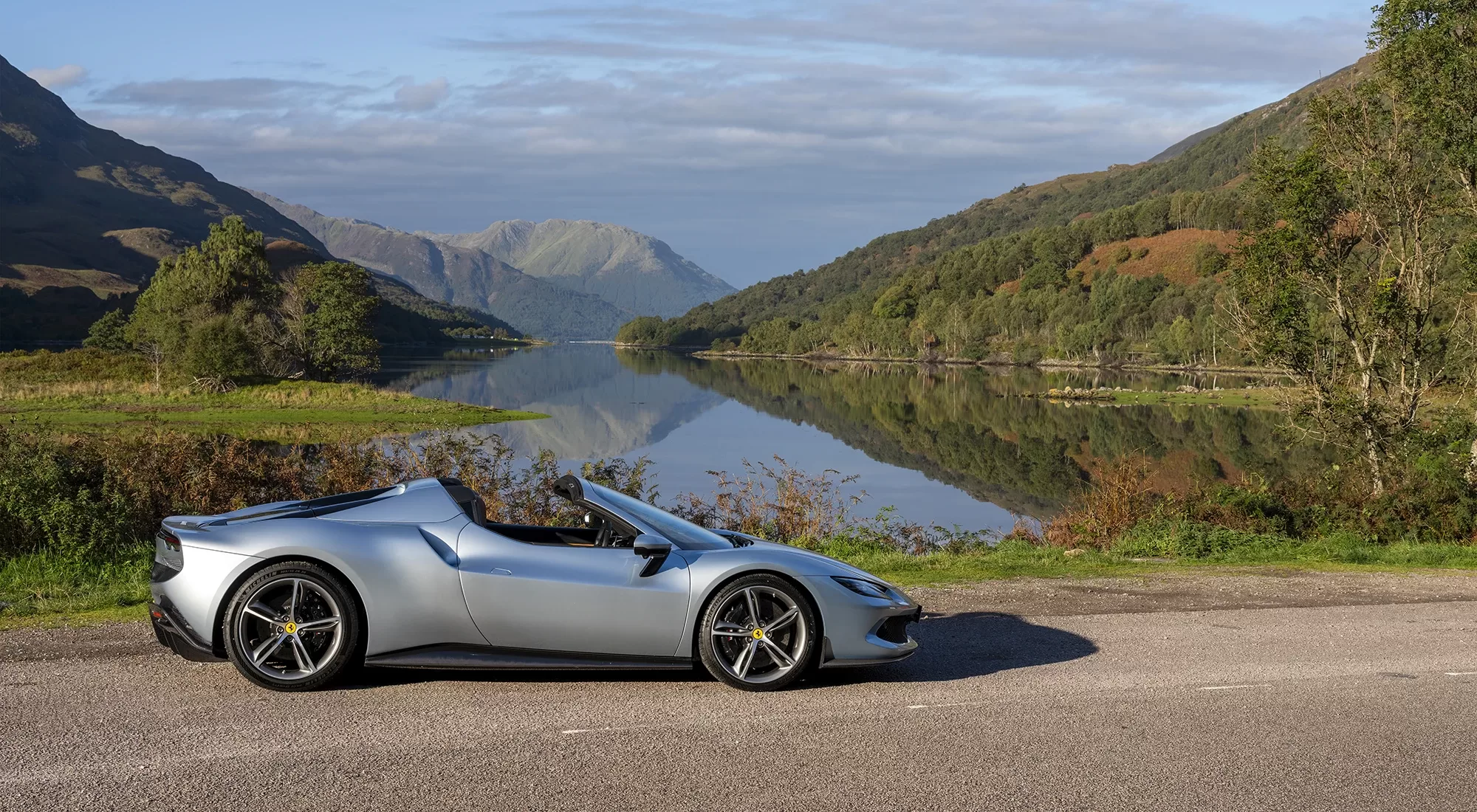
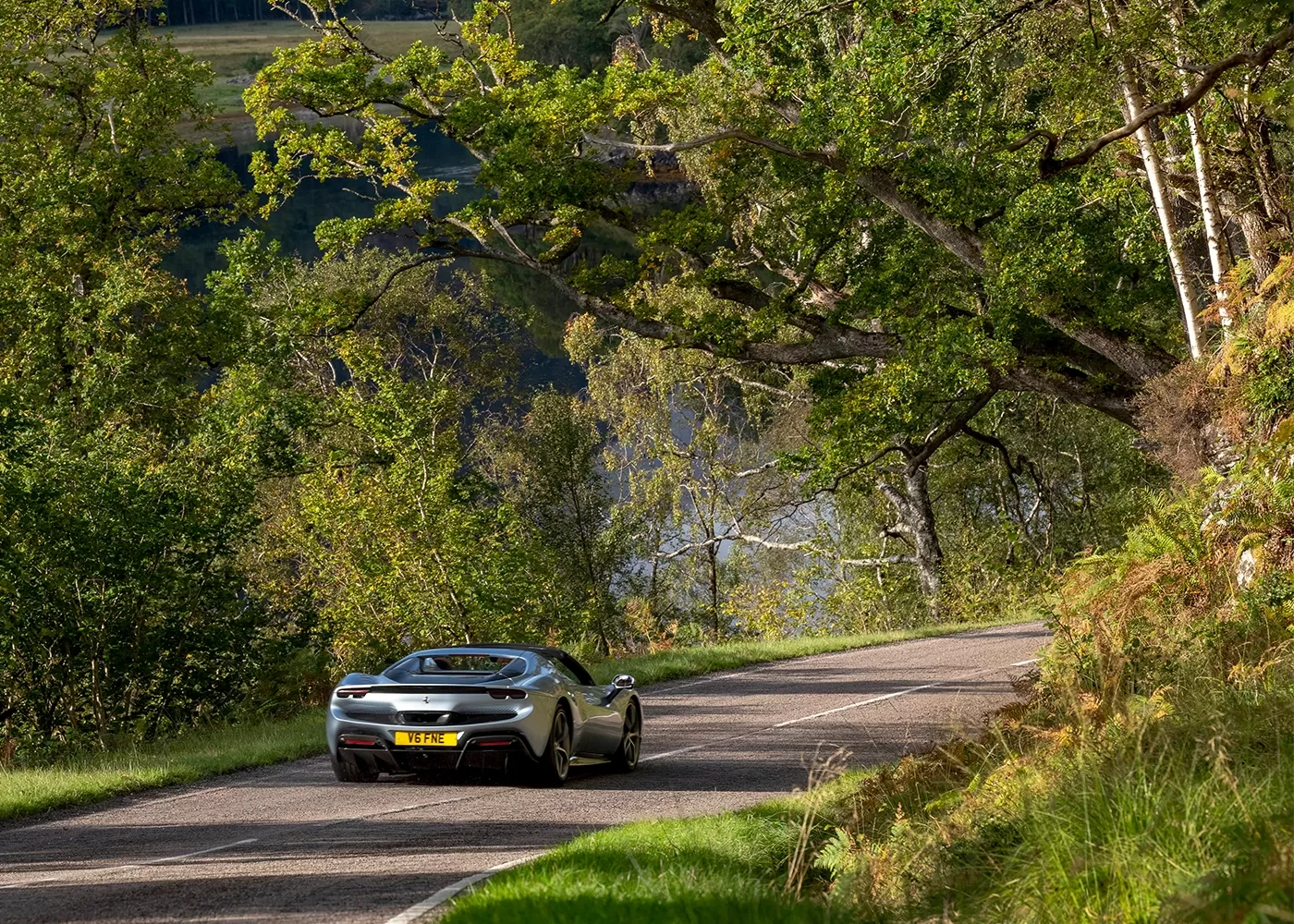
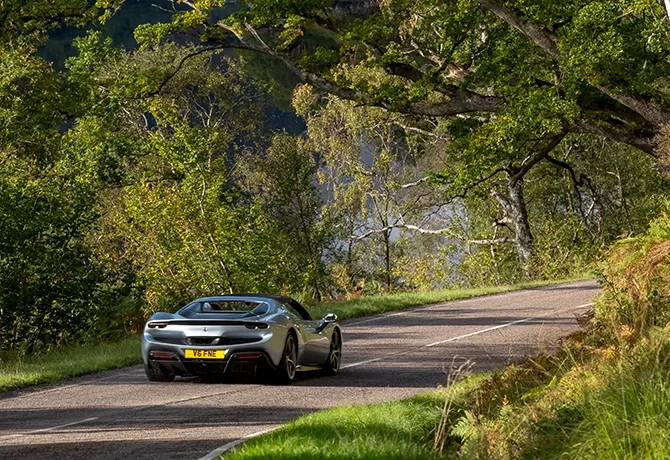
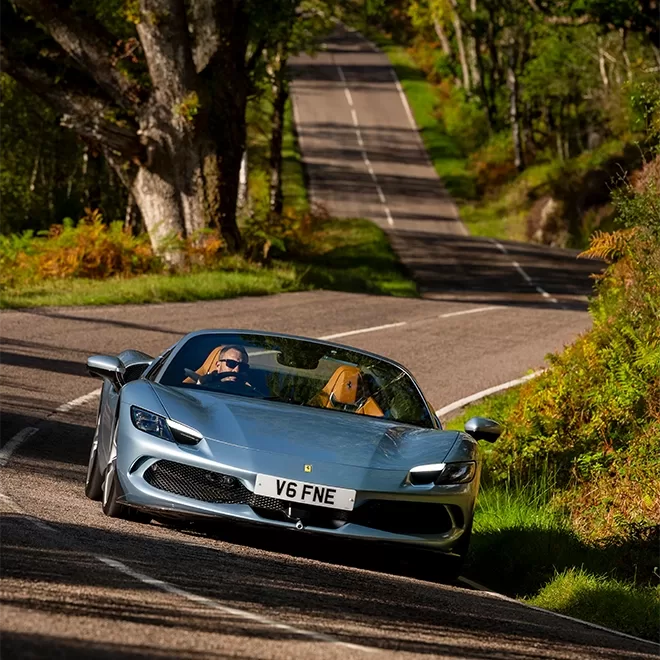
The scenery changes from verdant hills to brown and desolate moorland, peppered with bothies and Skyfall-like ruins. Moody horizons arrive under the Ferrari’s wheels faster than expected, and bridges over brooks test out the suspension. We spend the night at The Torridon and, after an evening of freshly shot game and fine single malts, emerge the following crisp morning to swipe the keys to a Grigio Alloy (a bluish silver that’s among the sexiest of Ferrari hues) 296 GTS, with the top already down.
This is not only one of the most beautiful mid-engined machines Ferrari has built in decades, it’s also the most revolutionary when it comes to technology. Ferrari have used hybrid motors before, in Formula One and with the limited-edition LaFerrari and SF90 hypercars. But with the 296 they were the first to bring a production plug-in hybrid super sports car to the market.
12Cilindri | Photo credit: Max Earey
Under the exotic bodywork, inspired by the legendary 250LM that won Le Mans in 1965, is a twin-turbocharged 3.0 V6 boosted by a single electric motor the size of a frying pan. Developing 123kW (165bhp) it enables the driver to whizz along silently, with zero emissions, for a distance of up to 15 miles or speeds of up to 84mph. Or engage the 654bhp internal combustion engine, which the driver can do independently or let the car make the decision for them, and enjoy the 819bhp combination of both energy sources.
All the Ferrari Berlinettas that preceded the 296 used V8s. The 296’s V6 makes a very different noise. Revving to 8,500rpm, the engine note is higher and quieter and there’s no crackle from the single exhaust pipe. The V8 was like Led Zeppelin live. The V6 is more like the rock band’s demo tapes – still wonderful, but without such a thump to your eardrums.
296 GTS | Photo credit: Max Earey
Having the GTS over the GTB hard-top serves to increase the aural excitement, and on these Scottish roads it’s the more rewarding car of the two we’ve driven. The 12Cilindri is a little too big and too fast for some of these roads, whereas you can really rag the 296 with the confidence it’ll remain stuck to the road and out of the way of oncoming traffic. Few electrified cars feel this light, and it corners with the directness of a bluebottle fly. Zero to 62mph is the same as its big brother, 2.9 seconds, and it maxes out at 205mph.
With the 296, Maranello has reset the definition of a modern super sports car. Not by shouting louder or piling in more cylinders, but by distilling everything Ferrari knows about speed, joy, and beauty into something remarkably complete. Its compact and innovative powertrain delivers numbers that satisfy the spreadsheet obsessives, yet what lingers is delicacy: the way the car breathes with the road, the immediacy of its responses, the sense that nothing is wasted. This is performance with poise.
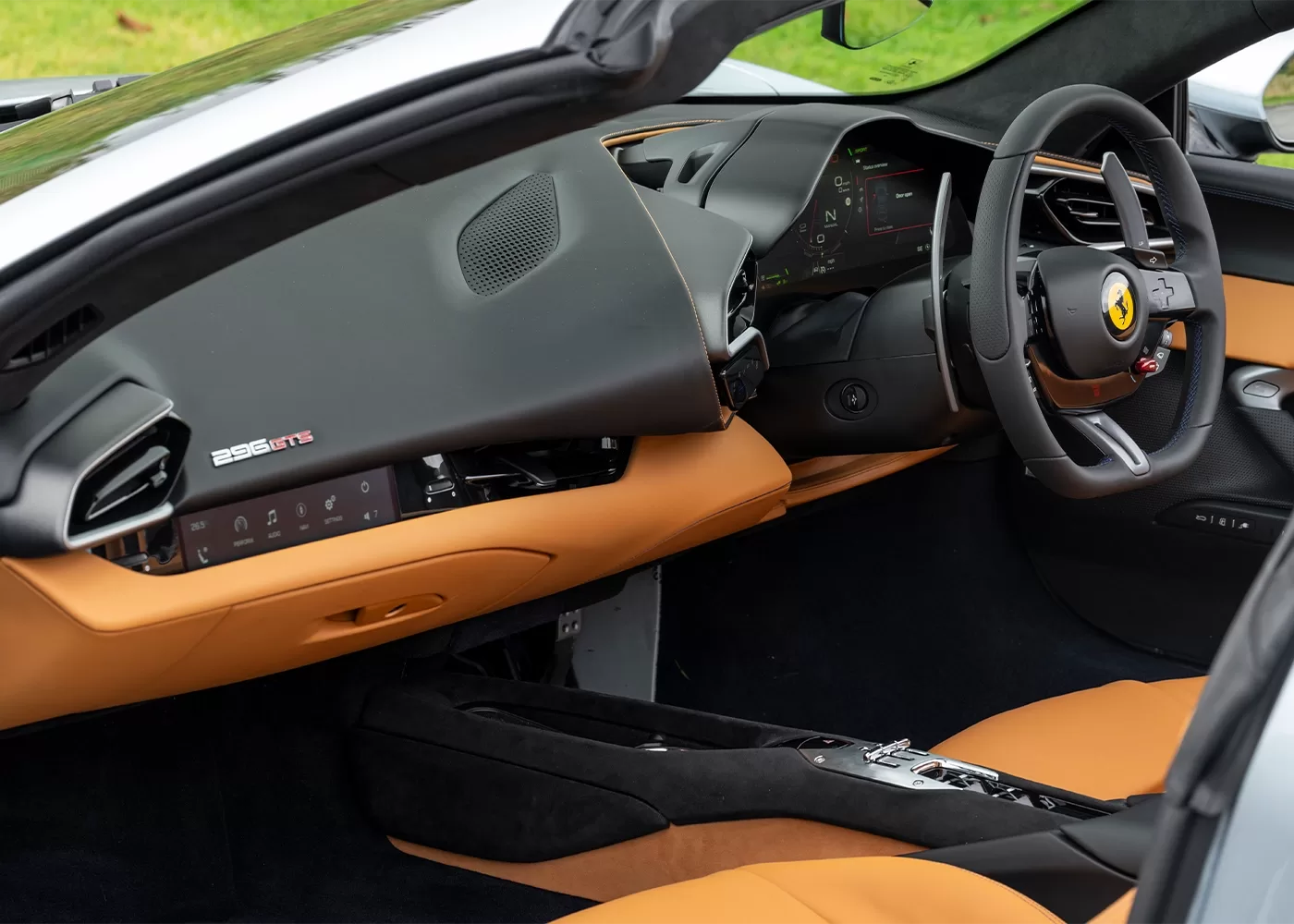
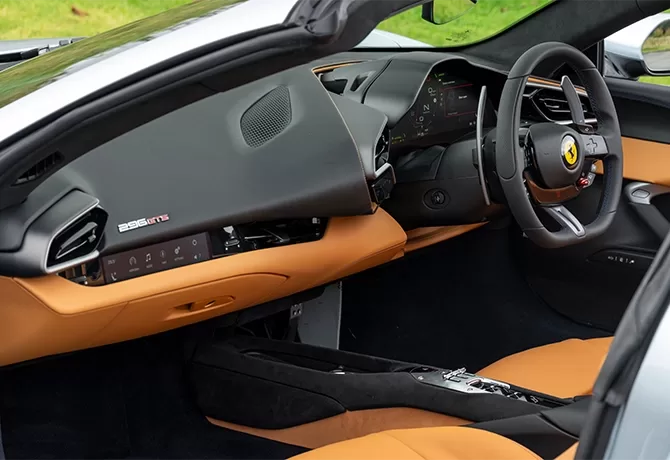
296 GTS | Photo credit: Max Earey
Crucially, the GTS adds a layer of theatre that feels authentically Ferrari. Roof down, the engine note hardens and ricochets off the scenery. The hybrid system doesn’t dilute the experience, it sharpens it. In an era where supercars risk becoming numb, remote, overwrought devices, the 296 GTS stands apart. It is fast without being brutal, advanced without being aloof, and thrilling without ever feeling intimidating. The perfect sports car should make you feel alive, and this Ferrari does so magnificently.
Which should you choose – the £280,000 296 GTS or the £336,500 12Cilindri? Different cars for different missions. On Scotland’s B roads, you should take the 296, and that probably goes for Italy’s Stelvio Pass, too. But the 12Cilindri is the car you’d use to cross the continent to get there.